Executive Summary
- Navigating Compliance & Funding: State management agencies act as primary awardees, while healthcare providers execute programs as sub-recipients under strict Rural Health Transformation Program (RHTP) statutory guidelines.
- Asset & Tech Infrastructure: Maximizing impact requires hybrid mobile clinics equipped with multi-purpose exam rooms, operatory suites, and dedicated satellite connectivity (e.g., Starlink) integrated directly into state Health Information Exchanges (HIE).
- Workforce Strategy: Combining workforce development funds enables clinics to offer multi-year service commitments (such as 5-year agreements) and upskill staff for advanced mobile care.
- Billing & Financial Sustainability: Long-term viability depends on capturing Medicaid reimbursements via Place of Service (POS) Code 15 and HCPCS Code Q3014 (telehealth originating site fees), combined with proactive Managed Care Organization (MCO) contract negotiations.
- Strategic Value: Mobile clinics drive the transition from fee-for-service to value-based care post-2030, directly improving key HEDIS quality metrics across underserved rural populations.
The Ultimate Mobile Health Clinic Guide for Rural Health Transformation Success (Before & After Funding)
The Rural Health Transformation Program (RHTP), authorized by Public Law 119-21 and administered by the Centers for Medicare & Medicaid Services (CMS), represents a generational $50 billion federal investment in rural healthcare infrastructure. Running from FY 2026 through FY 2030 ($10 billion annually), this initiative provides state agencies and local healthcare networks with the resources necessary to fundamentally reshape care delivery.
For grant recipients and sub-recipients, navigating federal compliance while maximizing patient reach is a delicate balance. One of the most effective, scalable strategies to achieve RHTP goals is deploying a high-capacity, technology-rich mobile health clinic.
This comprehensive blueprint outlines the foundational rules of the RHTP and details how to design, staff, fund, and optimize an advanced mobile asset to achieve lasting clinical impact.

1. Core RHTP Facts Every Awardee Must Know
Before allocating funds to any capital project, healthcare providers and government administrators must align their budgets with strict federal governance rules and statutory spending caps:
- The Funding Mechanism: RHTP operates via cooperative agreements between CMS and state government agencies. Funds flow downward to local clinical sub-recipients based on state-specific priority plans.
- The Construction Ban: RHTP guidelines strictly prohibit using funds for real estate acquisition or new brick-and-mortar facility construction. Fortunately, a custom-built mobile medical vehicle is classified as specialized capital equipment, making it 100% eligible for procurement.
- The 10% Administrative Cap: Total administrative, oversight, and operational reporting costs are capped at a maximum of 10% across the lifetime of the grant.
- The 15% Medical Payment Cap: Direct patient care provider payments and clinical salaries are capped at 15% per budget period and are strictly subject to HHS Executive Level II salary caps. The Department of Health and Human Services (HHS) and NIH Executive Level II salary cap is $228,000 for awards issued in 2026.
- The 5% EMR Limitation: Funding used for electronic medical record (EMR) system replacements or overhauls cannot exceed 5% per budget period.
2. Navigating the RHTP Relationship: Agencies as Recipients, Providers as Sub-Recipients
The RHTP operates through a structured, top-down funding model. Because state agencies rely on local healthcare networks to deliver actual clinical care, the relationship transitions into a recipient-to-sub-recipient dynamic governed by strict federal compliance guidelines.
The State Agency Role: Management, Monitoring, and Compliance
State agencies hold the primary cooperative agreement with CMS and carry ultimate accountability for the federal funds. For an agency administrator, approving a mobile clinic project requires managing several legal pillars:
- Enforcing the State Priority Plan: Pass-through funds must directly address the specific regional health metrics and priority factors approved in the state’s original application.
- Continuous Monitoring and Auditing: State agencies are required by CMS to conduct periodic audits, desk reviews, and site visits of their sub-recipients. If a mobile clinic fails to meet safety or data compliance standards, the state agency risks federal fund recovery.
- Managing the 10% Administrative Cap: State agencies must manage their own oversight costs alongside the administrative burdens of their sub-recipients, ensuring total administrative expenses do not cross the mandatory 10% program cap.
- Capital vs. Equipment Classification: Under Section 71401 of Public Law 119-21 and CMS grant guidelines, RHTP funds strictly restrict brick-and-mortar real estate expansion and heavy construction. To remain fully compliant, sub-recipients must classify mobile clinic acquisition, chassis modifications, hydraulic levelers, and expanding slide-outs under allowable specialized equipment and service infrastructure line items, rather than prohibited real property capital construction.
The Provider Role: Execution, Reporting, and Data Sharing
Healthcare providers acting as sub-recipients are the operational boots on the ground. When a provider uses RHTP pass-through money to launch a mobile health clinic, they assume substantial federal compliance responsibilities:
- Adhering to Cost Principles: Providers must track how every dollar is spent. The procurement of the mobile vehicle, medical equipment, and onboard technology must be documented transparently as allowable capital equipment rather than facility construction.
- Tracking the 15% Operational Cap: Providers must ensure that the direct patient care salaries for staff operating the mobile unit do not exceed 15% of their specific budget period allocation, while respecting HHS Executive Level II salary ceilings.
- Data and Policy Alignment: Sub-recipients must feed clinical and operational data back to the state agency. For mobile clinics, this means tracking metrics like patient volume in Medically Underserved Areas (MUAs), telehealth connection success rates, and chronic disease screening outcomes.
- Navigating State-Level Procurement: Because state health departments act as the primary pass-through entities, procurement models vary significantly across state lines. Sub-recipients must align with their specific state agency’s RFP/RFI award cycles, local matching fund mandates (where applicable), and quarterly performance-based drawdown schedules. Early engagement with state grant officers ensures your vehicle build scope matches state-specific statutory language.
3. Designing a High-Impact, Fully Loaded Mobile Asset
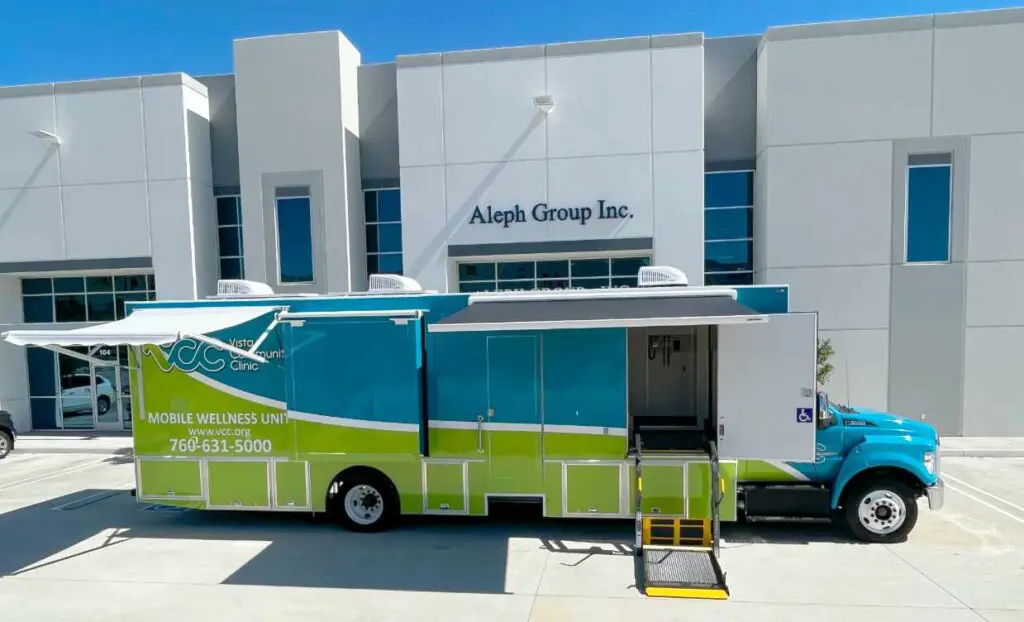
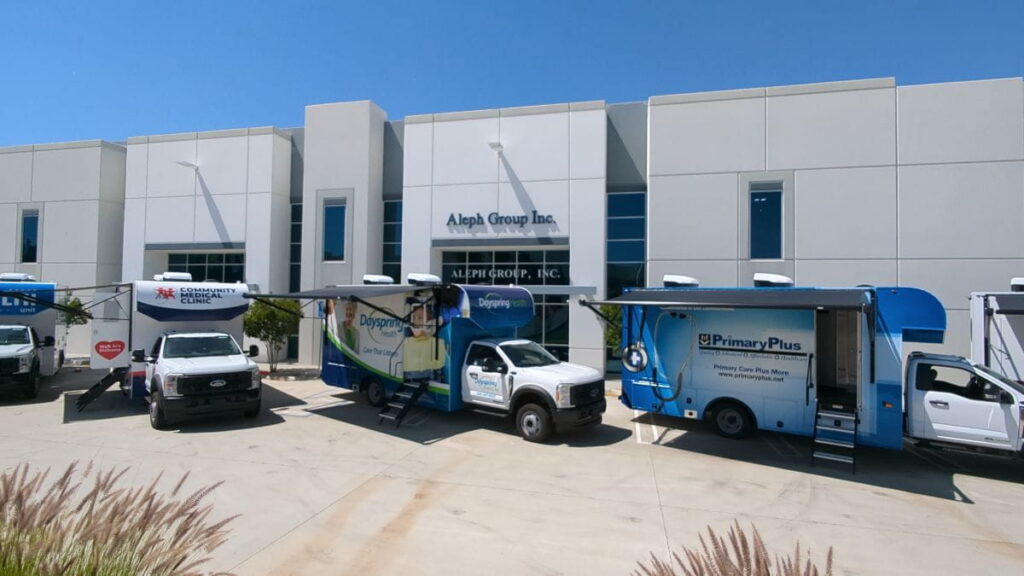
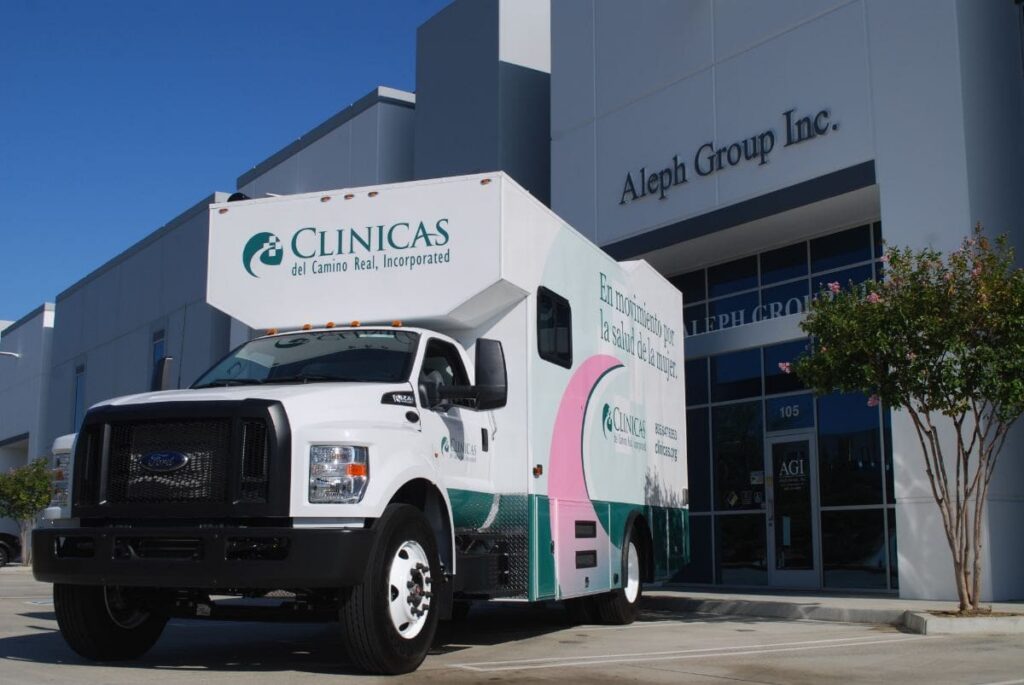
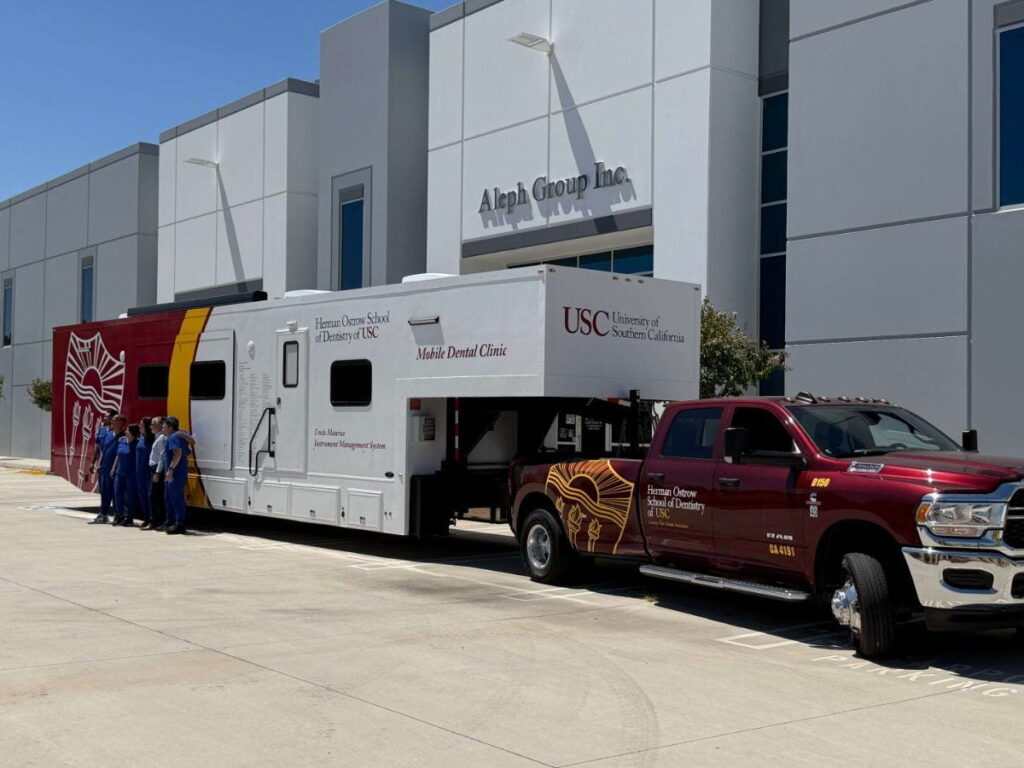
To maximize the value of an RHTP capital equipment allocation, a mobile clinic should be engineered as a sophisticated, multi-disciplinary care hub rather than a simple transport van. Awardees should consider a vehicle platform outfitted with three advanced layout components:
Hybrid Telehealth Infrastructure
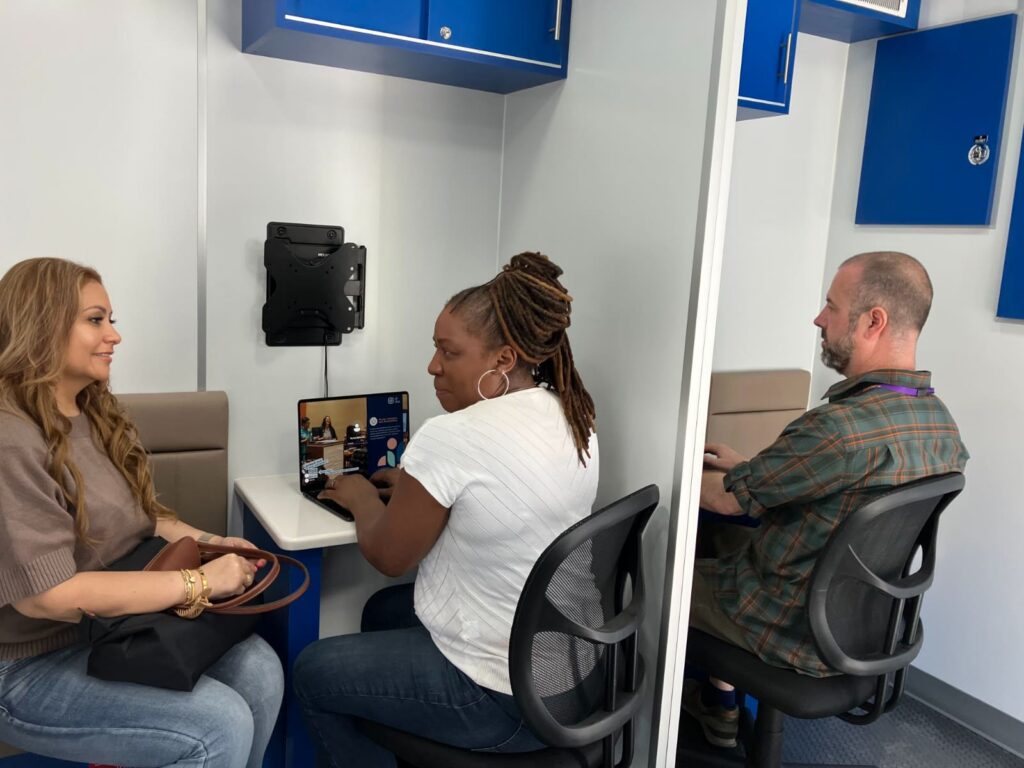
Connectivity turns a mobile clinic into an extension of a major medical center. By utilizing the grant’s uncapped Technology Modernization allowances, networks can outfit vehicles with:
- Redundant Satellite Broadband: High-bandwidth systems (such as commercial-grade Starlink) paired with dual-SIM cellular routers ensure seamless uptime in geographic dead zones.
- Connected Diagnostic Tools: Digital otoscopes, high-definition intraoral cameras, and portable ultrasounds allow on-board staff to transmit live clinical telemetry to off-site specialists.
- Virtual Specialist Consultation: Real-time video suites enable rural patients to consult with distant neurologists, cardiologists, or maternal-fetal specialists without leaving their zip code.
- Offline Data Syncing & Encrypted Transmission: In extreme geographic dead zones where satellite signals drop, on-board EHR systems must utilize secure, store-and-forward protocols that buffer Protected Health Information (PHI) locally using AES-256 encryption. Once connectivity restores via cellular or satellite link, automated HIPAA-compliant handshakes securely sync patient records directly with the state Health Information Exchange (HIE).
Multi-Purpose Exam Rooms
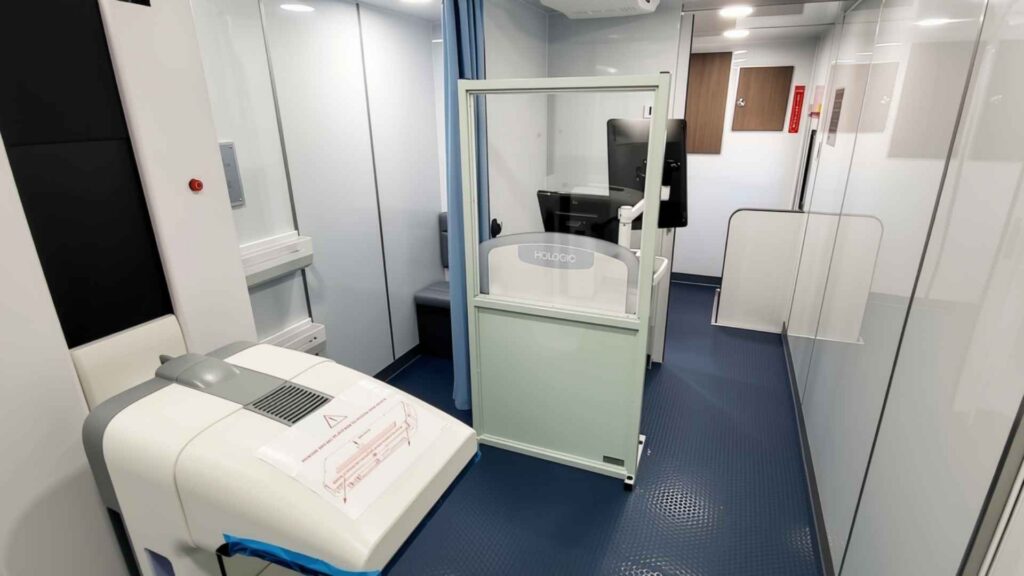
To optimize limited spatial footprints, exam spaces must be modular. Designing rooms with swing-away equipment, adjustable treatment chairs, and integrated digital vitals monitors allows a single vehicle to rotate clinical focus by the day – serving as a prenatal clinic on Monday, a pediatric immunization station on Wednesday, and a chronic disease management center on Friday, as an example.
Specialized Operatory Suite
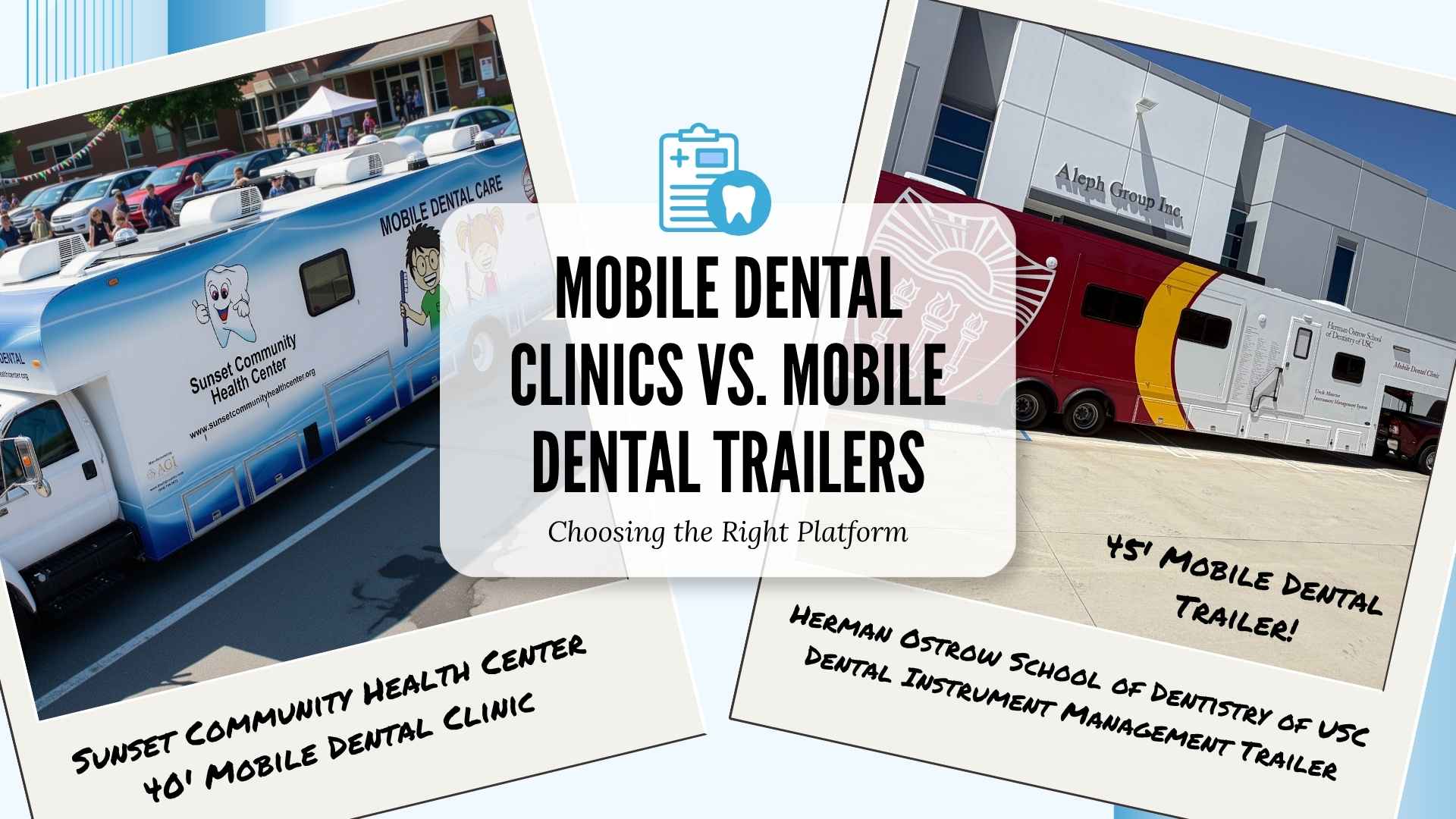
Integrating a dedicated clinical operatory extends care into specialized domains that rural populations struggle to access. This heavily isolated room can be configured for mobile dentistry (complete with compact X-ray units and dental compressors) or minor surgical interventions (wound care, biopsies, or long-acting reversible contraception insertions).
4. Solving the Staffing Puzzle: Combining Workforce Development Funds
The strict 15% budget cap on direct medical payments presents a challenge for long-term clinical operations. To bypass this hurdle and ensure continuous provider coverage on the road, administrators should explicitly tie mobile clinic operations into broader RHTP Workforce Development allocations.
Strategic Workforce Blending
- Recruitment and Retention Training: Use workforce allocations to fund rural residency rotations, specialized mobile health training modules, and advanced practice clinician certifications.
- Mandatory Service Commitments: Tie RHTP-funded clinical stipends and educational loan repayment incentives to multi-year service agreements (such as a 5-year rural service commitment) focused specifically on staffing the mobile network.
- Cross-Training Existing Personnel: Rather than hiring entirely new, high-cost staff dedicated solely to the vehicle, utilize workforce training dollars to upskill existing health system nurses, paramedics, and community health workers to operate the mobile clinic’s advanced telehealth and operatory equipment.
5. Strategic Medicaid Billing Pathways
To ensure your mobile health clinic remains financially viable after the RHTP funding window closes in FY 2030, state administrators and healthcare providers must design an aggressive, compliant Medicaid billing strategy from day one.
Because RHTP guidelines explicitly prohibit duplicating standard insurance-reimbursable services, your billing framework must seamlessly transition from using grant capital for launch costs to capturing state Medicaid revenue for operational continuity.
Optimizing Mobile Telehealth Reimbursements
- Capture the Originating Site Fee: Ensure your state Medicaid program recognizes a mobile medical vehicle as an eligible originating site. When a patient sits in your mobile clinic and connects with an off-site specialist, bill the HCPCS code Q3014 (Telehealth Originating Site Facility Fee) to cover the clinic’s tech and infrastructure overhead.
- Utilize Telehealth Modifiers: Distant-site clinicians consulting virtually into the mobile clinic must append the correct modifiers (such as Modifier 95 for synchronous telemedicine or Modifier GQ for asynchronous store-and-forward diagnostics) to standard E/M codes to prevent automatic claim denials.
- Leverage FQHC/RHC Look-Alike Billing: If the mobile clinic is operated by a Federally Qualified Health Center (FQHC) or a Rural Health Clinic (RHC), check if your state allows the mobile unit to bill under the parent facility’s Prospective Payment System (PPS) or All-Inclusive Rate (AIR). This ensures you receive a bundled, higher-tier reimbursement rate for the encounter rather than standard fee-for-service rates.
Monetizing the Mobile Operatory (Dental & Minor Surgery)
- Place of Service (POS) Code 15: Accuracy in documentation is paramount. All claims generated from the vehicle must utilize POS Code 15 (Mobile Unit). Miscoding services under POS 11 (Office) or POS 72 (Rural Health Clinic) during a mobile outreach event can trigger compliance audits and retroactive fund recovery by state agencies.
- Billing Mobile Dental (CDT Codes): For mobile dental operatories, combine standard preventative codes with Code D9410 (House/Extended Care Facility Call). Many state Medicaid programs allow this additional code to offset the logistical costs of transporting dental equipment and staff to remote locations.
- Global Surgical Packages: For minor surgical procedures performed in the vehicle (such as biopsies or long-acting reversible contraception insertions), ensure the billing team accounts for the global surgery window. Pre-operative evaluations, the procedure itself, and typical post-operative care must be bundled appropriately under the single CPT code to comply with Medicaid managed care regulations.
6. The Financial Pivot: Fee-for-Service vs. Value-Based Care
While Fee-for-Service (FFS) provides the immediate cash flow needed to sustain day-to-day on-the-road operations, Value-Based Care (VBC) metrics capture the long-term, high-yield quality incentive payments that state agencies prioritize under their RHTP cooperative agreements.
The table below highlights how identical mobile health interventions translate across both reimbursement paradigms:
| Mobile Clinic Intervention | Fee-for-Service (FFS) Metric | Value-Based Care (VBC) Metric | Long-Term Strategic Impact |
|---|---|---|---|
| Mobile Dental & Operatory Services | CPT/CDT Code Volume: Paid per cleanings (D1110), fillings, or minor surgical procedures billed under POS Code 15. | Preventive Oral Health Gaps: Percentage of assigned rural population receiving at least one annual preventive dental visit. | High FFS volume generates immediate revenue, while strong VBC performance secures annual shared-savings bonuses from Medicaid MCOs. |
| On-Board Telehealth Specialty Care | Originating Site Fees: Collection of HCPCS Code Q3014 per virtual encounter, paired with the distant specialist’s professional E/M billing. | Ambulatory Care Sensitive Conditions (ACSC): Reductions in preventable Emergency Department (ED) visits for chronic heart failure or COPD. | Moving a patient encounter from an expensive ER to a mobile telehealth unit drastically lowers the total cost of care—a core metric for VBC networks. |
| Chronic Disease Screenings | Individual Diagnostic Billings: Direct reimbursement for rapid point-of-care testing, such as HbA1c blood checks. | Population Health Compliance: Percentage of diabetic patients within a care desert maintaining an HbA1c level below 9.0%. | FFS pays for the test kit and staff time; VBC rewards the health system for moving an entire zip code into a safer clinical tier. |
7. Cracking the MCO Code: Contract Negotiation Tips
Because the majority of rural Medicaid beneficiaries are enrolled in Medicaid Managed Care Organizations (MCOs), your mobile clinic’s financial survival past the FY 2030 RHTP sunset depends on your managed care contracts. When sitting down at the negotiating table, utilize these four targeted strategies:
- Negotiate “Network Adequacy” as a Premium Lever: MCOs are legally required to ensure their members live within a strict number of miles or minutes from a provider. Position your mobile clinic as the MCO’s immediate solution to network adequacy penalties. Demand higher fee-for-service base rates or preferential tiering by demonstrating that your mobile clinic is the only asset closing their geographic network gaps.
- Formalize County-Wide and Multi-Zip Code Credentialing: Traditional MCO credentialing binds a provider to a single physical address. Insist on a customized “Mobile Provider Addendum” that requires the MCO to credential the mobile unit’s specific National Provider Identifier (NPI) across an entire geographic region (e.g., all approved service routes within specified counties) rather than a fixed street address.
- Establish an All-Inclusive “Mobile Encounter Rate”: Billing individual fee-for-service codes rarely covers the true overhead of operating a heavy medical vehicle. Negotiate an All-Inclusive Encounter Rate or an RHC/FQHC PPS Look-Alike Rate for the mobile clinic that wraps the professional service, the technology overhead, and the originating site fee (Q3014) into a single, flat payment per patient visit.
- Bake VBC Shared-Savings Into the Contract Structure: Agree to track specific quality metrics that directly impact the MCO’s state performance bonuses. Secure a Value-Based Care Shared-Savings Rider ensuring that if your mobile clinic reduces emergency room diversions or improves chronic disease compliance within a specific zip code, your health network claws back a designated portion of the MCO’s saved premium dollars.
8. The Ripple Effect: Expanding Access for Rural Clinics
Deploying an advanced mobile clinic does not just benefit the isolated patients it treats directly; it fundamentally strengthens the local brick-and-mortar rural health clinics (RHCs) and Federally Qualified Health Centers (FQHCs) anchored in the region.
- Triage and Upstream Prevention: Mobile units act as the forward-deployed scouting network for rural clinics. By conducting primary screenings and preventive care in deep care deserts, they identify high-risk, undiagnosed chronic conditions early.
- Creating a Seamless Care Funnel: When a mobile provider identifies a patient requiring complex, continuous management, they execute a secure, virtual warm handoff directly to the brick-and-mortar clinic’s schedule. This builds a robust patient pipeline for the parent facility.
- Accelerating Value-Based Care (VBC): RHTP explicitly pushes providers toward sustainable, value-based delivery models. Mobile clinics reduce costly, non-emergent Emergency Room utilization and improve regional health metrics (like A1C tracking and immunization compliance), directly driving up quality incentive payments for the entire rural health network.
SIDEBAR: Top 5 HEDIS Metrics Impacted by Mobile Clinics
Optimize your value-based care (VBC) contracts by tracking and demonstrating performance improvements in these high-priority Healthcare Effectiveness Data and Information Set (HEDIS) measures:
- Comprehensive Diabetes Care (CDC): Percentage of members (ages 18-75) with type 1 or type 2 diabetes who receive regular HbA1c testing and maintain glycemic control (<9.0%). Mobile clinics provide rapid point-of-care testing and regular rural routes to ensure consistent monitoring.
- Prenatal and Postpartum Care (PPC): Percentage of deliveries that received a prenatal care visit in the first trimester and a postpartum visit between 7 and 84 days after delivery. Mobile units deliver critical obstetrical care directly into maternity care deserts.
- Childhood & Adolescent Immunization Status (CIS/IMA): Percentage of children and adolescents who receive their recommended vaccine series by their 2nd and 13th birthdays. Mobile clinics serve as rolling public health units at rural schools to eliminate transportation barriers.
- Ambulatory Care Sensitive Conditions (ACSC) / ED Utilization: Number of non-emergent or preventable Emergency Department (ED) visits per 1,000 member months. Deploying a specialized operatory for immediate dental pain or minor surgical procedures keeps patients out of local ERs.
- Breast & Cervical Cancer Screenings (BCS/CCS): Percentage of eligible female members who receive timely mammograms and Pap tests within recommended clinical windows. Mobile clinics provide private, specialized preventative screening spaces in local areas, eliminating travel barriers.
9. RHTP Sub-Recipient Compliance Self-Assessment Checklist
Before submitting an application to your state agency for an RHTP sub-award, your organization must verify that its proposed project, budget, and operational workflows comply with CMS guidelines. Use this scannable checklist to audit your project design before formal submission:
Programmatic & Strategic Alignment
- State Priority Mapping: Project directly addresses the workload and healthcare need factors defined in your governor-endorsed state plan.
- Geographic Target Verification: Services are physically located in or routed through officially designated rural care deserts or Health Professional Shortage Areas (HPSAs).
- Non-Duplication Assurance: Project documentation proves services expand local access rather than duplicating existing insurance-reimbursable services.
Statutory Cap & Budget Compliance
- Capital Equipment Classification: Vehicle procurement, medical equipment, and mobile operatories are categorized as specialized equipment, completely avoiding forbidden brick-and-mortar construction costs.
- 10% Administrative Isolation: Total project oversight, indirect costs, and reporting administrative expenses are locked at or below 10% of the requested budget.
- 15% Direct Medical Cap: On-board clinical provider salaries do not exceed 15% per budget period and align with HHS Executive Level II salary caps.
- 5% EMR Limitation: Software integration or electronic medical record modifications do not exceed 5% per budget period.
- Cost Principle Exclusion: Budget contains zero pre-award costs, independent R&D fees, or cosmetic/experimental procedure fund requests.
Telehealth & Technology Infrastructure
- Infrastructure Funding Allocation: Satellite internet (e.g., Starlink) and hardware are billed under uncapped Technology Modernization lines, keeping them separate from the 5% EMR cap.
- Data Privacy Compliance: Virtual consultation channels utilize end-to-end encryption to satisfy HIPAA and CMS security guidelines.
- State HIE Integration: Digital infrastructure allows clinical data gathered on the road to feed seamlessly back into the state Health Information Exchange (HIE).
Workforce & Retention Strategy
- Workforce Fund Blending: Clinical recruitment incentives are tied directly to allowable RHTP Workforce Development tracks rather than general operational lines.
- Multi-Year Service Commitments: Provider incentives include mandatory multi-year rural service agreements (such as a 5-year service commitment).
- Staff Cross-Training Protocols: Training line items are budgeted to upskill existing network personnel to operate advanced mobile telehealth and operatory equipment.
Medicaid Billing & Long-Term Sustainability
- Place of Service Integration: Billing software is configured to use POS Code 15 (Mobile Unit) for all claims generated by the vehicle.
- Telehealth Fee Capture: Coding workflows are set up to submit HCPCS Code Q3014 for originating site facility fees.
- MCO Routing Approvals: Legal teams have scheduled amendments with local Medicaid Managed Care Organizations (MCOs) to credential the mobile unit across multiple zip codes.
- Post-2030 Financial Modeling: The application includes a 5-year financial glide path demonstrating how fee-for-service revenue and value-based shared savings will sustain the clinic after federal funding concludes in FY 2030.
Fleet Maintenance & Capital Reserve Modeling Post-2030
- Long-Term Fleet Sustainability: A mobile clinic’s clinical impact relies heavily on continuous physical uptime. Sub-recipients should allocate a portion of Managed Care Organization (MCO) capitation fees and value-based shared savings into a dedicated Capital Replacement Reserve Fund. This reserve ensures that ongoing chassis servicing, generator replacements, medical device recalibrations, and eventual vehicle refurbishments are fully funded well past the 2030 federal grant sunset.
10. Conclusion & Immediate Next Steps
The Rural Health Transformation Program (RHTP) is more than a standard federal grant; it is a five-year runway to permanently erase the geographic boundaries that have historically compromised rural patient outcomes. By channeling these funds into highly connected, multi-disciplinary mobile health clinics, sub-recipients can bypass the program’s strict real estate bans while establishing a high-impact presence in persistent care deserts.
Success on the road requires meticulous up-front design. By anchoring your budgeting inside strict statutory caps, cross-leveraging workforce development funds, and establishing aggressive Medicaid and MCO billing frameworks early, your mobile health clinic will evolve from a grant-funded pilot into a permanent, self-sustaining pillar of your regional healthcare ecosystem. The funding window through FY 2030 provides the capital. Strategic execution will determine the legacy.
Immediate Action Items for RHTP Sub-Recipients
If you are a healthcare provider or a local administrator looking to deploy your state’s pass-through funds for a mobile health asset, execute these immediate operational steps:
- Distribute the Compliance Checklist: Share Section 9 of this blueprint with your internal finance, legal, and clinical leadership teams to run an initial compliance audit on your project proposal.
- Audit Your State’s Priority Plan: Contact your state health department’s RHTP program manager to obtain the precise workload and regional health metrics approved in your governor’s original application. Your mobile clinic proposal must explicitly align with these metrics.
- Engage Certified Vehicle & Telehealth Vendors: Initiate procurement discussions with specialized medical vehicle builders and rural connectivity experts. Request formal engineering specs that isolate capital equipment costs from construction, and demand dual-SIM cellular/satellite hardware arrays to guarantee field uptime.
- Schedule an MCO Preliminary Review: Contact your primary Medicaid Managed Care Organizations to discuss drafting a “Mobile Provider Addendum.” Confirm their baseline credentialing processes for POS Code 15 and express your intent to track regional HEDIS metrics in exchange for shared-savings rate riders.
Ready to Deploy a Compliant, High-Impact Mobile Health Clinic?
Launching a custom mobile clinic that satisfies strict RHTP statutory caps, complex telehealth requirements, and long-term billing frameworks requires specialized engineering and strategic planning.
At Aleph Group Inc., we engineer purpose-built mobile clinics and specialty vehicles designed to maximize grant allocations and expand clinical reach in rural communities.
📞 Schedule a Technical Consultation with Our Mobile Health Experts
Discuss your chassis specifications, custom floor plans, and federal grant equipment line items with our team today.
Frequently Asked Questions (FAQs)
Q: What is the main difference between an RHTP recipient and a sub-recipient?
A: State management agencies act as primary awardees (recipients) responsible for overarching grant administration, monitoring, and compliance. Healthcare providers and clinic operators function as sub-recipients responsible for program execution, patient care delivery, and data reporting.
Q: Can Rural Health Transformation Program (RHTP) funds be used for mobile clinic technology like satellite internet?
A: Yes. Awardees can leverage unbudgeted or operational tech lines within RHTP funding to equip mobile clinics with hybrid telehealth technology, including dedicated satellite connectivity (such as Starlink) to maintain seamless Health Information Exchange (HIE) integration in remote areas.
Q: How can healthcare facilities address staffing shortages for mobile clinics using RHTP funding?
A: Facilities can combine RHTP workforce development funds with existing workforce programs to offer clinicians multi-year service commitments (e.g., 5-year agreements) and cross-train staff to operate specialized mobile equipment.
Q: What billing codes should mobile health clinics use for telehealth reimbursements?
A: Mobile health providers can optimize Medicaid reimbursements by utilizing Place of Service (POS) Code 15 along with HCPCS Code Q3014 to claim telehealth originating site facility fees.
Q: How do mobile health clinics support financial sustainability beyond federal grant funding?
A: Mobile clinics facilitate a transition from fee-for-service models to value-based care by expanding patient access, negotiating favorable Managed Care Organization (MCO) contracts, and directly improving key HEDIS quality metrics across underserved rural populations.
Grant & Funding Source Disclaimer
This article is for informational and educational purposes only and is not formally endorsed, sponsored, or affiliated with the Centers for Medicare & Medicaid Services (CMS), the U.S. Department of Health and Human Services (HHS), or any state department of health. Rural Health Transformation Program (RHTP) grant rules, state pass-through allocations, and Notice of Funding Opportunity (NOFO) guidelines are subject to change. Readers should consult official CMS releases and state-level grant administration guidance before making capital or operational commitments.
Medical Coding, Billing, & Legal Disclaimer
Medical billing, coding guidelines, and Medicaid reimbursement rules vary by state and managed care contract. The information provided regarding POS codes, HCPCS codes, and billing pathways does not constitute professional legal, financial, or certified medical coding advice. Healthcare providers and sub-recipients are strongly advised to verify code applicability, local coverage determinations (LCDs), and state Medicaid policies with a qualified healthcare compliance officer or certified coding specialist.
Commercial / Manufacturer Disclosure
This guide is published by Aleph Group Inc., a manufacturer/provider of custom specialty mobile units and telehealth infrastructure. While this content aims to offer objective operational and statutory insights for RHTP awardees, readers should evaluate all equipment, chassis options, and vehicle vendors according to their specific program requirements and state procurement rules.